Blog Quote

Fill the unforgiving minute with sixty seconds' worth of distance run. ~Kipling
Showing posts with label reading. Show all posts

Sunday, November 30, 2014

On W. Somerset Maugham


Lately I haven’t been able to get enough of British author W. Somerset Maugham. A year or so ago I read what is considered to be one of his greatest works, “Of Human Bondage,” and was disappointed. I was also consciously disappointed by other works of his that I picked up and read, “Cakes and Ale,” and “Ah King.” I say “consciously,” because unconsciously, I believe that something in his writing attracted me. If it hadn’t, I don’t believe I would have kept reading any more of his works. I would have dropped “Of Human Bondage” more quickly than I dropped Plutarch’s “Lives” when I found myself nodding off after a couple of pages. But I didn’t… as if against my own will, I kept coming back to Maugham, reading volumes of his short stories and various random works of his that happened to be lying around the house. I told myself it was just because I was bored, and his pieces are lightly entertaining.
         Generally I am grateful when people take it upon themselves to recommend books to me. “You’ll love this,” they say, or “That book was amazing,” or “This one’s a classic, a must-read.” What they really mean is, at that point in time, that book had something to say that spoke directly to their frame of mind or current experience, that the author articulated a message so personally powerful, it captivated their mind and their energy and their concentration, and they came away from the encounter somehow changed.  What they mean is, “that book expressed ideas that coincided directly with my own, or gave voice to ideas I didn’t even know I had.” Alternatively, or additionally, “this book expressed ideas that blindsided or contradicted some of my deep-set convictions, forcing me to re-evaluate and alter them.” It’s hard to know, though, when to give up on a book or an author altogether, or to keep coming back and trying, because you know it just simply isn’t the right time. There is a season to read certain works, and there is a season to refrain from reading them. (For example, when struggling with depression, or an emotionally trying set of circumstances, I make it a personal rule to stay away from Dostoevsky.)  
         A year ago, I wasn’t ready to appreciate W. Somerset Maugham the way I have come to appreciate him now. And a year, or even a month from now, perhaps I will have ceased to appreciate him. Usually if someone whose opinion I value, and whose fundamental convictions resemble mine, keeps telling me I ought to try and read so-and-so, I will keep trying. It was this way with Herman Melville. Over and over I picked up and gave up on Moby Dick. It was never the right moment. His metaphors meant nothing to me, his analogies seemed preachy, I found his descriptions of whaling tedious and his imageries empty and dull. Then suddenly my sophomore year of high school I picked it up again, devoured it, and loved it. I found it exciting, moving, dramatic, relevant. I was glad I had persisted.
And suddenly, at this point in my life, I feel as though I can relate to Maugham's writings. It wasn't this way several years ago. I wish I could remember exactly why I didn’t like Maugham then nearly as much as I seem to now... I think the endings of his works left me feeling dissatisfied. I strongly disliked his conclusions. An author – especially an author of short stories – can do so much with his conclusions... They are the solution to the conflict. They are the grand finale. They are the apex, the answer, the elucidation of everything you've been anticipating… And Maugham’s endings always left me going, “Wait…what??” Here is an example from “The Trembling of a Leaf;”

“He wondered why he had ever loved her so madly. He had laid at her feet all the treasures of his soul, and she had cared nothing for them. Waste, what waste! And now, when he looked at her, he felt only contempt. His patience was at last exhausted. He answered her question.

         “He’s the captain of a schooner. He’s come from Apia.”
         “Yes.”
         “He brought me news from home. My eldest brother is very ill and I must go back.”
         “Will you be gone long?”
         He shrugged his shoulders.”


And?

And nothing. That was it. As in life, no dramatic conclusion, no solution, no resolution. Not a happy ending, although certainly not a tragic one… Just an ordinary one. Maugham’s writings are always that – delightfully ordinary, and incredibly readable. I have struggled through too many philosophical treatises and dense historical expositions not to appreciate readability when I see it. And the more widely I read, the more important a quality I believe readability is for an author to have. It’s all very well to say deep things in an abstruse, subtle manner, to leave readers guessing at the true meaning, and scholars arguing about your purpose in your wake for decades... But if I were an author, I think I’d much rather leave my readers perfectly clear as to my intentions. If my message is important enough to write a novel about, it should be important enough to express lucidly. And Maugham’s writing is nothing if not lucid. Someone once told me how much they hate naïve, blunt writing, writing that attempt clumsily to wrap itself in opaque metaphor, but instead results in a maladroit statement of personal ideology. There is a fine line, certainly, between trying too hard to be subtle and failing… and trying too hard to be subtle and succeeding. Either way, though, I think that you’re simply trying too hard. I think the point is not to try at all. I am no author, and I would not dare to attempt walking the fine line between subtle expression of ideas and blatant proclamation of dogma, but as a reader, it’s nice to enjoy the happy medium Maugham provides. His books have been described as “pleasure reading” – so what? Reading should be pleasurable, shouldn’t it?
And so, a year later, I come back to Maugham. Although there are lists of other books I should be reading, multitudes of authors to try, whole genres I have not explored, horizons to be expanded… I keep coming back to Maugham. Especially since his novels and short stories revolve around subjects that truly interest me at this point in my life – love and friendship and betrayal and fidelity and heartbreak and relationships between people. Ever and always, they are honest, and deal honestly with the corruption and the joy and the hypocrisy and the pleasure of being alive.  And they end at absurdly abrupt junctions, leaving you wondering at the point, the meaning of it all... as do the stories in our own lives.
No better analysis of Maugham’s writing exists than his own. In the Preface to his first novel of complete short stories, East and West, Maugham meditates on his own writing, and on the two greatest influences behind it, Maupassant and Chekov. He both criticizes and praises them, and talks about how he discovered them as a young man and how they’ve impacted his style ever since. When talking about Maupassant, you almost think that Maugham is discussing himself… “It may be that [Maupassant’s novels] have no great spiritual significance. Maupassant did not aim at that. He looked upon himself as a plain man; no good writer was ever less a man of letters. He did not pretend to be a philosopher, and here he was well-advised, for when he indulges in a reflection, he is commonplace. But within his limits he is admirable. He has an astonishing capacity for creating living people. He can afford little space, but in a few pages can set before you half a dozen person so sharply seen and vividly described that you know all about them that you need” (Maugham, East and West, 1921).
Again, when he lectures on Chekov and Maupassant both… (“lectures”? Is that the right word? Maugham never lectures. He muses.) he might be speaking of his own writing: “Chekov is extremely readable. That is a writer’s supreme virtue and one upon which sufficient stress is often not laid. He shared it with Maupassant. Both of them were professional writers who turned out stories at more or less regular intervals to earn their living… it was part of the day’s work. They had to please their writers. They were not always inspired, it was only now and then that they produced a masterpiece, but it is very seldom that they wrote anything that did not hold the reader’s attention to the last line… Sometimes a critic will describe a book of short stories as magazine stories and thus in his own mind damn them. That is foolish. No form of art is produced unless there is a demand for it and if newspapers and magazines did not publish short stories they would not be written…”
Right now, perhaps I’m weary of subtlety. I appreciate the effort it takes, as an author, to say what he wants to say using fables, metaphors, and elusive language. I appreciate the epic proportions of a novel like Brothers Karamazov, and the importance of themes such as Hugo's and Tolstoy's. But coming down to earth from novels like theirs leaves one with a depressing sense of anti-climax, the sneaking suspicion that life, real life, is not like that, at all... Human beings are not like that. The majority of them, unlike Levin and Alyosha and Jean Valjean, do not possess the capacity to rise above their past and become such passionate, self-sacrificing idealists. One in a hundred years, perhaps… and about these men, certainly, such novels deserve to be written. But what about the rest of us? Maybe we don’t deserve to have novels written about us, and our petty struggles and base desires and failings and small victories… and there are people like Somerset Maugham who have written about us just the same.
         “I like a story,” concluded Maugham in his introduction, “that fits...You feel that life does not dovetail into its various parts with such neatness. In life, stories straggle, they begin nowhere and tail off without a point. That is probably what Chekov meant when he said that stories should have neither a beginning nor an end. It is certain that sometimes it gives you a sensation of airlessness when you see persons who behave so exactly according to character, and incidents that fall into places with such perfect convenience. The story-teller of this kind aims not only at giving his own feelings about life, but at a formal decoration. He arranges life to suit his purposes. He follows a design in his mind, leaving out this and changing that; he distorts facts to his advantage, according to his plan; and when he attains his object produces a work of art. It may be that life slips through this fingers; then he has failed; it may be that he seems sometimes so artificial that you cannot believe him, and when you do not believe a story-teller he is done. When he succeeds he has forced you for a time to accept his view of the universe and has given you the pleasure of following out the pattern he has drawn on the surface of chaos. But he seeks to prove nothing. He paints a picture and sets it before you. You can take it or leave it.” 
             

Knowingly or unknowingly, Maugham was describing his own purpose and style as an author. Like his hypothetical writer, Maugham also does not seek to prove anything - he paints a picture - in some cases, a masterpiece - and sets it before you - and you, the reader - today, tomorrow, or years in the future - are perfectly free to either take it or leave it. 

Thursday, March 14, 2013

Othello: Shakespeare's Aristotelian Tragedy


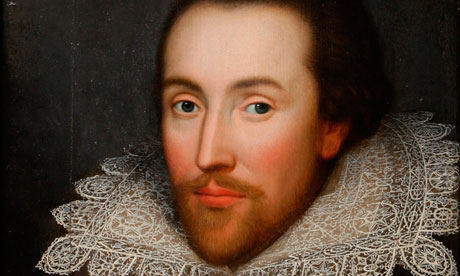
http://static.guim.co.uk/sys-images/Admin/BkFill/Default_image_group/2011/4/19/1303213280692/William-Shakespeare-007.jpg
The great fourth-century Greek philosopher Aristotle described a tragedy as “an imitation of an action of high importance, complete and of some amplitude: in language enhanced by distinct and varying beauties…by means of pity and fear effecting its purgation of these emotions” (qtd. in Kennedy & Gioia 856).  He may very well have been describing the epic Shakespearean drama, Othello.  William Shakespeare’s famous play concerning the downfall of a Moorish general interweaves jealousy, suspense, intrigue, murder, and suicide to create a magnificent tragedy of the highest Aristotelian order.  Aristotle prescribed three main ingredients for a tragic drama recipe: hamartia, or a tragic flaw in the tragic hero’s character that brings about his downfall; katharsis, or a purgation of the audience’s emotions so that they feel that they have learned something from the play; and anagnorisis, or the character’s revelation of some fact not previously realized (Kennedy & Gioia 856-857). Shakespeare’s protagonist Othello fulfills all of Aristotle’s requirements for a tragic hero, as Othello is a character of noble status who falls from that position of power to one of shame because of his hamartia. Moreover the plot of Othello contains a powerful katharsis through its climax and conclusion, and an anagnorisis when Othello realizes that Iago and Desdemona are not who they seemed to be.
            First of all, Shakespeare’s protagonist, the Moorish general Othello, fits Aristotle’s definition of a tragic hero.  According to Kennedy and Gioia, Aristotle states that a tragic hero must have three dominant qualities: he must be a person of high estate, he must fall from that position into unhappiness, and his downfall must be brought about by his hamartia, or his tragic flaw (856-857).  Othello is not only a successful general in the Venetian army but is also well respected, admired, and well liked.  Contrary to common assumption, “high estate” does not mean that the tragic hero must be royal or even noble; it simply “gives him a place of dignity to fall from and perhaps makes his fall seem all the more a calamity” (Kennedy & Gioia 856).  Since Othello enjoys a position of power and happiness at the beginning of the play, this status makes his downfall from beloved general to despised murderer infinitely more tragic and moving (Kennedy & Gioia 857-858).
http://www.utm.edu/research/iep-wp/wp-content/media//aristotle1.jpg            According to Aristotle, however, the tragic hero’s collapse cannot be a simple deterioration from success to misery.  The most distinctive feature of the Aristotelian tragic hero is hamartia; his downfall must be brought about by a character flaw or flaw in judgment that leads to his destruction.  “In Aristotle’s theory of tragedy,” explains The Cambridge Guide to Literature, hamartia is “the mistake or failing which brings about the hero's downfall.  ‘Tragic flaw’, the usual English translation, can mislead by its concentration on moral weakness - encouraging readers to view Hamlet's fate as a condemnation of his uncertainty, or Othello's as a condemnation of his jealousy - since hamartia can also be a matter of ignorance or mistaken judgment” (“Hamartia”).  Thus hamartia is more than a moral weakness; it is a crucial mistake on the part of the tragic hero that causes him to plunge from greatness to grief.  Othello’s mistake as a tragic hero is believing Iago’s treacherous lies about Desdemona’s unfaithfulness.  Instead of investigating the matter further, Othello rashly jumps to the worst conclusions about his wife and believes every lie that Iago whispers into his ear. Although the villain Iago is certainly to blame for bringing about Desdemona’s murder and Othello’s suicide, Shakespeare makes it quite clear throughout the play that Othello’s impulsive behavior and irrational naïveté are the main cause of his miserable end, as Iago himself states at the beginning of the play: “The Moor is of a free and open nature, / That thinks men honest that but seem to be so, / And will as tenderly be led by the nose / As asses are” (1.3. 376-379).  Iago recognizes that he can use these weaknesses of Othello’s to hasten his downfall. Therefore Othello fits Aristotle’s description of a tragic hero who has descended from high estate to destruction because of his hamartia.  
But the tragic hero is not the only element required by Aristotle for tragedy. Neither is it the only component of Othello distinguishing Shakespeare’s play from a comedic drama.  A true Aristotelian tragedy also contains what the Greeks called a katharsis, or a purgation that leaves the audience feeling justified and uplifted.  As Kennedy and Gioia point out, this purgation is not necessarily always a positive one (857).  In a tragedy like Othello, where almost all of the characters wind up dead, the audience is certainly not expected to feel happy or cheerful about the play’s conclusion, but they do feel a sort of justification at the lessons learned by the play’s characters and satisfaction in the villain’s punishment.  Elisa Galgut states that, “The concept central to Aristotle’s theory of tragedy – katharsis – has been the subject of much debate, and the traditional readings are modeled on some type of cleansing, medical purging or religious purification” (14).  Moreover, these interpretations assume that the fear and pity aroused by tragedy is purged throughout the play, resulting in the state of katharsis. The overall idea behind katharsis, she concludes, is that tragedy effects some sort of transformation in the audience’s emotions, leaving them with a feeling of justification (15).
Aristotle said, “The tragic pleasure is that of pity and fear, and the poet has to produce it by a work of imitation” (qtd. in Galgut 15).  This implies that to feel the satisfaction of a good katharsis in a tragedy, the drama must arouse feelings of pity and fear in the audience and then expunge those feelings through a satisfactory conclusion.   In Othello, Shakespeare certainly moves the audience to feel pity for Othello, for Desdemona, for Cassio, and even for Iago. They also fear for the fate of the happy couple, and realize their worst fears when Othello smothers his innocent wife in a jealous rage.  Once more the audience pities Othello when he recognizes afterwards that Desdemona is innocent and stabs himself in remorse. Even though the play does not end “happily ever after,” the deaths of the unhappy couple and the punishment of the villain Iago bring a sort of closure to the drama.
The ultimate purpose of katharsis in a tragedy, as Kennedy and Gioia point out, is to purify our feelings, refining them into something more ennobling (857).  The audience may not come away from a production of Othello laughing or feeling particularly cheerful, but they will certainly feel as though they have learned something important and witnessed an epic drama that has affected them morally and spiritually.  This is the purpose of tragedy – to dramatize the weaknesses, despair, and failings of the human spirit and to demonstrate how to better ourselves through this experience.  Through this emotionally charged plot filled with intrigue and conflict, Shakespeare has certainly met all of Aristotle’s requirements for katharsis. 
http://graphics8.nytimes.com/images/2011/03/14/crosswords/othello0314/othello0314-blog480.jpg
The last element of Aristotelian tragedy found in Shakespeare’s Othello is anagnorisis, a sort of epiphany or revelation of fact that was previously unknown to the tragic hero.  John MacFarlane states that Aristotle’s literal Greek definition of anagnorisis consists of two parts; “The first part of the definition characterizes recognition as a change from ignorance into knowledge, leading either to friendship or enmity” (367).  Shakespeare brings out this particular feature of anagnorisis towards the end of the play when Othello realizes that his trusted friend Iago has trapped him in a web of lies and has deceived him into thinking Desdemona is unfaithful.  Iago’s wife Emilia cries out before she dies, “Moor, she was chaste. She loved thee, cruel Moor. / So come my soul to bliss as I speak true” (5.2.258-259) and suddenly Othello understands that it is Iago who has misled him, not Desdemona.  This anagnorisis causes Othello to cry, “Wash me in steep-down gulfs of liquid fire! / O Desdemon! Dead, Desdemon! Dead! O! O!” (5.2.289-290), to stab and wound the villain Iago, and then to kill himself in remorse.
The second aspect of the Greek word anagnorisis is its more superficial, general connotation.  According to The Encyclopedia Britannica, anagnorisis simply conveys “the startling discovery that produces a change from ignorance to knowledge. It is discussed by Aristotle in the Poetics as an essential part of the plot of a tragedy… Anagnorisis usually involves revelation of the true identity of persons previously unknown, as when a father recognizes a stranger as his son, or vice versa” (“Anagnorisis”).  It is the simple epiphany experienced by the tragic hero as he realizes something significant, like the fact that he has killed the woman he loves for no reason.
This moment of revelation for Othello is the climax of Shakespeare’s play as everything comes together (or in Othello’s case, comes apart) before the tragic hero’s eyes and the full extent of Iago’s treachery and deceit is made clear to the him.  For the audience, the moment is especially climactic, because we have known the truth all along.  As Roger W. Herzel puts it: “When the man is Othello, a special kind of double vision comes into play: looking through our own eyes, we see the injustice of the action, but looking through the eyes of Othello we see its justice with equal clarity… In tragedy then, we witness an imitation of an action which has a terrible significance of which we are fully aware but the agent is not” (498).  The audience knows that Desdemona is innocent; thus, Othello’s baseless accusations and crime against her arouse special pity and loathing.  This makes the Othello’s anagnorisis at the end of the play exceptionally poignant.
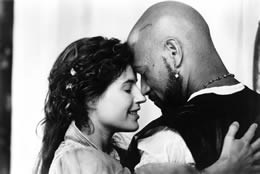
http://www.filmeducation.org/images/film_library/othello.jpg
How then does one distinguish a simple play of comedy from a great Aristotelian drama? Aristotle said three dramatic features provide this distinction: hamartia, katharsis, and anagnorisis (Kennedy & Gioia 856-858). Shakespeare’s great play depicting the downfall of a Moorish general through jealousy and deceit is such a tragic drama.   The Greek philosopher’s influence upon the sixteenth-century English playwright is evident in works such as Othello, as Sarah Dewar-Watson points out, “Discussion of Shakespeare's tragedies is still commonly framed in Aristotelian terms – the fall from greatness, the fatal flaw, the moment of catastrophe… It could be argued that Aristotle has had a hand in defining what is still generally regarded as the core of Shakespeare's tragic canon” (1). Through the character of Othello as a tragic hero with a fatal flaw, the purgation of emotion through the couple’s deaths and the punishment of Iago, and the epiphany Othello experiences at the end of the play, Shakespeare demonstrates with eloquence each and every one of Aristotle’s qualifications for tragedy. Othello is a tragic drama of epic proportions that has stood the test of time and continues to move audiences with its powerful themes of jealousy, intrigue, betrayal, faithfulness, death, and remorse.

References


Anagnorisis. (2013). In Encyclopædia Britannica. Retrieved from http://www.britannica.com/EBchecked/topic/22338/anagnorisis

Aristotle. (2010). Poetics. In X. Kennedy, D. Gioia, X. Kennedy, & D. Gioia (Eds.), Literature: An Introduction to Fiction, Poetry, Drama, and Writing (p. 856). New York: Longman.

Dewar-Watson, S. (2004). Shakespeare and Aristotle. Literature Compass , 1 (1), 1-9.

Galgut, E. (2009). Tragic Katharsis and Reparation: A Perspective on Aristotle's Poetics. South African Journal of Philosophy , 28 (1), 13-24, 12.

Hamartia. (2000). In The Cambridge Guide to Literature in English. Retrieved from http://www.liberty.edu:2048/login?url=http://www.credoreference.com/entry/cupliteng/hamartia

Herzel, R. W. (1974). "Anagnorisis" and "Peripeteia" in Comedy. Educational Theatre Journal , 26 (4), 495-505.

Kennedy, X., & Gioia, D. (2010). Literature: An Introduction to Fiction, Poetry, Drama, and Writing (6th Compact Edition ed.). (X. Kennedy, & D. Gioia, Eds.) New York: Longman.

MacFarlane, J. (2000). Aristotle's Definition of "Anagnorisis" . The American Journal of Philology , 121, 367-383.

Shakespeare, W. (2010). Othello, the Moor of Venice. Literature: An Introduction to Fiction, Poetry, Drama, and Writing (6th Compact Edition ed.). (X. Kennedy, & D. Gioia, Eds.) New York: Longman.


Friday, August 24, 2012

The Only Free Man

https://blogger.googleusercontent.com/img/b/R29vZ2xl/AVvXsEgrr6XUHWfc7QFLSaPermSWtyYDJtJNgCu0Depih72llW4gW9QyRqhRpJlPJqYbrxi8xJEaHAitgNAyVnLDJWuNvNwc881SWpT0x0NE1EgawJ3F6dmK9871tvX4wbYuVsTKbcpoZPW35w/s1600/Pen-Paper.gifI don't presume to be a writer on the same level or of the same quality as W. Somerset Maugham, one of the greatest English authors of the twentieth century. I don't claim to hold all of his views or admire all of his ideas. However when I came across this passage in one of his greatest novels, (though one of his most depressing and satirical,) "Cakes and Ale", its profundity and truth gave me cause to stop reading and contemplate it for a few moments.
                 "She embarked upon a conversation which, I gathered from her tone, was of a facetious and even flirtatious character. I did not pay much attention, and since it seemed to prolong itself,  I began to meditate upon the writer's life. It is full of tribulation. First he must endure poverty and the world's indifference; then, having achieved a measure of success, he must submit with a good grace to its hazards. He depends upon a fickle public. He is at the mercy of journalists who want to interview him... of editors who harry him for copy... of persons of quality who ask him to lunch and secretaries of institutes who ask him to lecture, of women who want to marry him and women who want to divorce him, of youths who want his autograph... of agents, publishers, managers, bores, admirers, critics and his own conscience. But he has one compensation. Whenever he has anything on his mind, whether it be a harassing reflection, grief at the death of a friend, unrequited love, wounded pride, anger at the treachery of someone to whom he has shown kindness, in short any emotion or any perplexing thought, he has only to put it down in black and white, using it as the theme of a story or the decoration of an essay, to forget all about it. He is the only free man."
                I am not sure if any English professors or literary analysts would agree with me, but to my mind this idea as Maugham expresses it here actually encapsulates the whole of this particular work. "Cakes and Ale" satirizes the social and personal lives of authors in twentieth century England through the characters of Alroy Kear, William Ashenden, Edward and Rosie Driffield. The long-suffering author Edward Driffield is forced to put up with the antics of his coarse and wayward wife Rosie as she flouts the conventions of the times and carries on affairs with all of his friends, including Ashenden. Maugham leads one to believe that Edward has no idea of what is going on, and indeed, not even Rosie suspects that Edward is aware of her behavior until the very end after she has run away with another man. Edward then publishes a book in which the heroine, obviously Rosie, is unfaithful to her husband in his time of deepest need, describing her actions with the greatest of detail. This leaves Rosie to wonder in the end how much her husband really knew, and moreover, why he never gave any indication of his knowledge. Driffield offers no explanation, and Rosie, leaving the past behind and moving on with life, remains untroubled by too much speculation. But the answer is given to us the readers by the narrator Ashenden in the passage above.
              Driffield was, in every sense of the term, an author. His refuge was his writing. He was "the only free man", because no matter what happened to him, it could go down in black and white and he would be untroubled by it forever after. Friends could disappoint and betray him - his wife could run away with another man - his child could die - he would pay heavily the price of fame. And yet none of this could ever inhibit his one true gift, nor quench his one true passion - it could only fuel it and enhance its quality. This is why Maugham describes the author as "the only free man."
              This led me to reflect upon the real true freedom of writing. I have never had to pay the price of fame, and I hope that I never will. Yet in some small measure I can understand what Maugham meant when he said that the writer has one compensation, because the most significant freedoms of the writer are his freedoms of thought and expression, and these are the liberties that are the most precious and the most useful to him. They are also the most precious and useful to those around him privileged to share in his thoughts. A truly gifted author stands above the common folk only because he has found a way to express thoughts and experiences that everyone has in an eloquent, poignant, and unique way - he has a voice that people want to listen to. This is his liberty - that when he encounters life's pitfalls he is merely given more words for that voice.
              Some people express themselves through music - some through their clothing - some through their speech. Most of us express ourselves partly through all of these things. But the author is unique. He expresses himself by taking to pen and paper (or nowadays, to Microsoft Word) and literally expressing his opinions, his thoughts, his experiences, and his ideas to the world. Sometimes the world listens. Sometimes it doesn't. It really shouldn't matter. The writer writes because he loves writing for its own sake, because it is a sweet freedom to him, as essential to him as food.
            But don't envy the writer this unique freedom, for it comes at a heavy cost, as Maugham expresses above, a cost that includes "persons of quality who ask him to lunch, and secretaries of institutes who ask him to lecture, women who want to marry him and women who want to divorce him, of youths who want his autograph..." Only an author can understand the longing to express life's turmoil in order to be free of it; only a gifted writer can live contently in his rich inner world while the rest of mankind tumbles head over heels attempting to make sense of life. The author's refuge enables him to analyze what has gone wrong - and if not fully understand, at least relocate it to a solid black-and-white place where it can bother him no longer. When I think about the unique refuge the writer has in his writing, I realize that indeed, the writer is as Maugham claims -  "the only free man."

Thursday, January 19, 2012

Tidbit from Tennyson for a Melancholy Day

I never thought of happy memories as being sad until the people giving them significance were taken away. Now "the days that are no more" and the reminders of them are painful. Yet, if I could go back in time, would I do without them? I think not, for as Tennyson points out in another poem; "I hold it true whate'er befall, I feel it when I sorrow most - 'tis better to have loved and lost, than never to have loved at all." 
                                                                  
Tears, idle tears, I know not what they mean,
Tears from the depth of some divine despair
Rise in the heart, and gather in the eyes,
In looking on the happy autumn-fields,
And thinking of the days that are no more.

   Fresh as the first beam glittering on a sail,
That brings our friends up from the underworld,
Sad as the last which reddens over one
That sinks with all we love below the verge;
So sad, so fresh, the days that are no more.

   Ah, sad and strange as in dark summer dawns
The earliest pipe of half-awakened birds
To dying ears, when unto dying eyes
The casement slowly grows a glimmering square;
So sad, so strange, the days that are no more.

   Dear as remembered kisses after death,
And sweet as those by hopeless fancy feigned
On lips that are for others; deep as love,
Deep as first love, and wild with all regret;
O Death in Life, the days that are no more
!

Wednesday, December 7, 2011

An Argument for the Awesomeness of Tennyson

                                                                            
                    “I hold it true, whate'er befall;
                    “I feel it when I sorrow most;
                  “ ‘Tis better to have loved and lost
                    "Than never to have loved at all."

Everyone has heard the latter part of this stanza at least once in their lifetime, but not everyone knows who penned these famous words about love and loss. The author was Alfred “Eccentric” Lord Tennyson, one of the greatest poets who ever lived, and certainly the greatest poet of his time.

Alfred was born in England, the fourth of twelve children, in 1809, the same year in which Abraham Lincoln and Charles Darwin were also born. When he was eighteen in 1827 he left to study at Cambridge, where he became part of a literary group called the “Apostles”. He toured Europe with his best friend Hallam, who later became engaged to Alfred’s sister Emily. In 1833 Alfred went back home, no longer able to afford college tuition, and it was there that he learned that Hallam had died suddenly of fever while travelling abroad. His terrible grief at his friend’s death influenced much of his later poetry, especially the great elegy “In Memoriam.”
In 1850 William Wordsworth, Britain’s Poet Laureate, died, and Tennyson was named to take his place. He married Emily Sellwood, whom he had loved since 1836, and they moved in 1853 to a country house on the Isle of Wight where they raised two sons named Hallam and Lionel. Later in life Tennyson continued to write and gain popularity, and his poetry began to follow a narrative style. In 1884 Queen Victoria and Prince Albert granted Alfred a baronetcy. In 1892 he died at the age of 83 from heart failure and was buried in Westminster Abby. 
Although Tennyson was popular in his own day, his successors the Edwardians and Georgians of the early 1900s often mocked and ridiculed him, accusing him of escapism in his themes of knights, Camelot, and chivalry. Today, however, many critics consider him the greatest poet of the Victorian age. From Milton to Tennyson there was no poet combining in his person all the skills of expressing detail, love and reverence for God, optimism, and penetrating introspection with uniqueness, nor has there been one since Tennyson. To the critics, four predominant poetic traits make Alfred Lord Tennyson the greatest poet of the Victorians – to me, they make him one of the greatest poets in the history of language. These are: his skill in portraying details such as color, how he stands out from the other Romantic poets such as Wordsworth and Keats, the method by which his poems culminate in optimism and hope in God, and, most importantly, his belief in and reverence for God.
 One of Tennyson’s most prevailing characteristics is his ability to convey color to the mind’s eye of the reader. For example, in “The Lady of Shalott”, Sir Lancelot’s attire is described in rich detail: “All in the blue unclouded weather / Thick-jewell’d shone the saddle-leather / The helmet and the helmet-feather / Burn’d like one burning flame together / As he rode down to Camelot. / As often thro’ the purple night / Below the starry clusters bright / Some bearded meteor, trailing light / Moves over still Shalott. / His broad clear brow in sunlight glow’d / On burnish’d hooves his war-horse trode / From underneath his helmet flow’d / His coal-black curls as on he rode / As he rode down to Camelot.”
Tennyson learned much of this sense of imagery from Keats, but his portrayals are vivid rather than vague, his colors brilliant in imagination rather than soft and fanciful. In “Morte d’Arthur”, Excalibur's hilt "twinkled with diamond sparks, / Myriads of topaz-lights, and jacinth-work / Of subtlest jewelry.” Tennyson was famous for these passages of sparkling color and poetic artistry and it is one of the strongest points of his poetry. As an early twentieth century critic praises this ability; “His appreciation for sensuous beauty, especially color, is acute…his descriptions are magnificently beautiful, often with much detail…Add the truth and tenderness of his emotion, and it results that he is one of the finest and most moving of lyric poets.” (Alfred Tennyson from A History of English Literature, by Robert Huntington Fletcher, 1918)
Another one of Tennyson’s greatest assets was his singularity among all of the other Romantic poets, including Keats, Coleridge, and Wordsworth. He stands alone in many of his themes, motifs, and symbols, as well as his modes of expression and ideals. Unlike the other Romantics, who viewed nature as a sort of thing to be worshipped, Tennyson put nature into its proper perspective as a medium expressing and pointing the way towards the higher Creator Being. Some of his predominant themes are, the reconciliation of religion and science, the virtues of perseverance and optimism, and the glory of England, while some of Keats’ prevailing themes consist of the inevitability of death and the worship of beauty in nature, (“Beauty is truth, and truth, beauty.”) Wordsworth mourned the passing of England’s glory and Coleridge is notorious for a certain bizarre use of language and remoteness from reality –these characteristically Romantic traits contrast Tennyson’s reverence for England and for the importance of accurate scientific detail in his poetry. Undoubtedly Tennyson was influenced by his Romantic predecessors, but he veered from their path in numerous ways, and became the father of Victorian poetry in so doing.
   Out of Tennyson’s poetic themes, extolling the virtues of optimism is one of the greatest and most unique – after his best friend’s death he struggled through a time of intense despair, which he eventually overcame. Many of his poems exemplify this struggle with despair and hope, culminating in the ultimate victory of optimism over depression, and the realization of the need to carry on trusting in God. This need for perseverance is best expressed in the works “Ulysses” and “In Memoriam,” but it also appears in “The Lotos Eaters”, “The Lady of Shalott”, and “The Charge of the Light Brigade.” The latter two glorify characters who embrace their destinies in the face of death.
The ideas of Tennyson’s poetry are noble, yet conservative, expressing the Victorian ideals of his time. Instead of becoming confused and straying from religion because of the scientific discoveries of his time, as so many Christians did, he used his poetry to reconcile this newly discovered science with God.
God is essentially the optimism of Tennyson’s poetry. It is best expressed in his long “In Memoriam”, a series of short poems woven together to create an elegy to his dead friend, Arthur Hallam. It begins as a tribute to the “Strong Son of God”, and folds out into the argument that, though man, never having seen God’s face, has no proof of His existence, he can still reach God through faith. Tennyson attributes the sun and moon to God, acknowledging Him as the creator of life and death. The Son of God Tennyson portrays as both human and divine – man controls his own will, but the Son of God has also predestined each man for a purpose. The speaker in “In Memoriam” expresses the hope that “knowledge [of God will] grow from more to more” though this knowledge should be combined with a reverence for God’s incalculable wisdom. The speaker also repeatedly asks that God would forgive him for his grief for “Thy creature, whom I found so fair.” Yet Tennyson concludes the poem with the hope that his best friend lives on in a better and higher World.
 “In Memoriam” is seen as the ultimate expression of Tennyson’s belief in God; “In religion, his inherited belief, rooted in his deepest fibers, early found itself confronted by the discoveries of modern science, which at first seemed to him to proclaim that the universe is much what it seemed to the young Carlyle, a remorseless monster, 'red in tooth and claw,' scarcely thinkable as the work of a Christian God who cares for man. Tennyson was too sincere to evade the issue, and after years of inner struggle he arrived at a positive faith in the central principles of Christianity.” (Alfred Tennyson from A History of English Literature, by Robert Huntington Fletcher, 1918
Thus Tennyson stands alone on a pedestal of greatness, for though the Romantic Keats and Wordsworth had genius, they did not have belief in God, and their genius was misplaced worshipping ideas such as Nature and Innocence. Though many more modern poets following Tennyson have used their poetry and genius to glorify God, they have not expressed their ideals as exquisitely, nor with as much skill, as Tennyson has done. His vivid and beautiful use of the English language combined with the wide variety of  poetic forms he mastered, such as lyrics, ballads, “descriptive poems, sentimental reveries, and idyls; long narratives, in which he displays perfect narrative skill; delightfully realistic character-sketches, some of them in dialect; dramas; and meditative poems, long and short, on religious, ethical, and social questions”, (Alfred Tennyson from A History of English Literature, by Robert Huntington Fletcher, 1918) place him among the great geniuses of literature. Alternatively, his departure from the accepted and usual themes and ideals of these geniuses set him apart into his own category of greatness, reserved only for those masters who gave glory to their Giver for their mastery.


Tuesday, October 11, 2011

To Autumn

This ode was written by John Keats, an English romantic poet. "Ode to Autumn" is known as the most simple of Keats' odes, depicting the features of fall in quiet, poetic terms. 
Keats was born in 1795 and died young from tuberculosis in 1821. He was only twenty-six years old. 


                          SEASON of mists and mellow fruitfulness,
  Close bosom-friend of the maturing sun;
Conspiring with him how to load and bless
  With fruit the vines that round the thatch-eves run;
To bend with apples the moss’d cottage-trees,        
  And fill all fruit with ripeness to the core;
    To swell the gourd, and plump the hazel shells
With a sweet kernel; to set budding more,
  And still more, later flowers for the bees,
  Until they think warm days will never cease,        
    For Summer has o’er-brimm’d their clammy cells.
2.


Who hath not seen thee oft amid thy store?
  Sometimes whoever seeks abroad may find
Thee sitting careless on a granary floor,
  Thy hair soft-lifted by the winnowing wind;        
Or on a half-reap’d furrow sound asleep,
  Drows’d with the fume of poppies, while thy hook
    Spares the next swath and all its twined flowers:
And sometimes like a gleaner thou dost keep
  Steady thy laden head across a brook;        
  Or by a cyder-press, with patient look,
    Thou watchest the last oozings hours by hours.
3.


Where are the songs of Spring? Ay, where are they?
  Think not of them, thou hast thy music too,—
While barred clouds bloom the soft-dying day,        
  And touch the stubble plains with rosy hue;
Then in a wailful choir the small gnats mourn
  Among the river sallows, borne aloft
    Or sinking as the light wind lives or dies;
And full-grown lambs loud bleat from hilly bourn;        
  Hedge-crickets sing; and now with treble soft
  The red-breast whistles from a garden-croft;
    And gathering swallows twitter in the skies.

Tuesday, October 4, 2011

Getting to Know Milton and His Times

           Thousands of poets have come and gone throughout the ages; only a few bask in the light of distinction. Several names everyone knows are: Shakespeare, Dante, Lord Alfred Tennyson, Homer, Edgar Allan Poe - and John Milton. You have probably heard of all of these men, whether or not you are acquainted with their works and context. And yet Milton's "Paradise Lost" was written about four hundred years ago, in a style unfamiliar and awkward to our modern ears, concerning an archaic tale filled with classical mythology and midrash - how did such a poet "irrelevant" to our modern age create such a timeless pedestal for himself?
           For one thing, Milton's poetry is timeless. For another, he was a truly great man, one of the geniuses of his age and perhaps the most educated poet to ever pick up a pen. "Paradise Lost," for instance, he wrote as an old blind man in prison - he would create the verses in his head at night, and then dictate them to his three daughters in the morning. I myself doubt that I'd be able to read the poem aloud without stumbling, much less compose it and recite it from memory hours later!
          He was born in London on December 9th, 1608, son of a composer and legal secretary. In those days wealth guaranteed a good education and Milton's family was very well-to-do. (One wonders what the Poets' Hall of Fame would be missing had he been born a pauper.) When he was twelve years old he went to St. Paul’s school in London. Here he began to study Latin and Greek – eventually he would become fluent in Latin, Greek, Hebrew, French, Spanish, Dutch and Old English! No doubt his profuse knowledge of eight languages contributed to the diversity of language in his writing. According to his younger brother, John would study very hard, often sitting up until one in the morning with a candle. His early classical foundations combined with his self-discipline and innate genius are key factors in his fame and greatness later in life. 
            In the seventeenth century, college took the place of high school, so at seventeen years old John Milton enrolled at Christ’s College in Cambridge. He was hardworking, yet argumentative, which led to his suspension in 1626 after a dispute with his tutor. This was a foreshadowing of the stormy part he would play in politics in the future - Milton always felt he was entitled to his own strong opinions, and had been classically trained to think critically and express himself forcefully. He was eventually assigned a new teacher and graduated with a B.A. in 1629, ranking fourth out of twenty-four honors students. However, he always felt out of place at Cambridge; contradictory to his strong-minded nature, he held a reputation as a sissy, nicknamed "the Lady" for his long curls, scholarly disposition, and effeminate features. Hoping to become an Anglican priest, he stayed to obtain his Master of Arts degree on July 3rd, 1632. He had made a few good friends, among them Edward King, for whose death he would compose “Lycidas” – and the theologian Roger Williams who tutored Milton in Dutch in exchange for lessons in Hebrew.
           The next six years John "took off" - he moved to the country and spent these days in isolation, studying and reading theology, philosophy, history, politics, and science. This would be deemed a colossal waste of time by our modern views - according to our standards, he was obligated at that point in his life to get a job, to work, to utilize his college degrees. Yet he knew he needed this time alone to continue to deepen his learning, to grow more, to "find himself", so to speak. The results were his well-earned reputation as the most educated English poet of all time, a thorough knowledge of the classics, and a well-trained mind. He continued to write poetry during this time.
            In May 1638 John went on a tour of France and Italy, meeting famous intellectuals such as Galileo, displaying his poetical skills and experiencing new ideas and traditions. News of civil war in England recalled him home in July of 1639. Back in England he began writing prose tracts against episcopacy and became a private tutor. In the spring of 1642, Milton married seventeen-year-old Mary Powell. Unfortunately, it was not a happy marriage and matters were made worse when the English Civil War broke out in August and his wife’s family sided with the king while Milton sided with Parliament. Around this time Milton wrote the “Divorce Tracts,” which advocated divorce and earned him the new nickname “Milton the Divorcer.” 
            In March 1649, the Cromwellian government appointed Milton Secretary of Foreign Tongues. 1652 was a difficult year for Milton – in February he became blind, in May his wife died giving birth to daughter Deborah who later also died, and one-year-old son John died in June. Three years later he remarried, but then his new wife and daughter both died in 1658. Experiencing traumas such as he did in 1652 perhaps created a more mature and stronger Milton - he had come a long ways from near college expulsion over a tiff with a tutor in 1626. 
            Oliver Cromwell also died that October and Cromwellian government came to an end. The period of the Restoration began and Milton was forced into hiding because of his propaganda writings and association with Cromwell. King Charles II was restored to the throne on May 30th, 1661. In 1663, Milton remarried yet again and spent his time tutoring and writing “Paradise Lost”, which was published in 1667 and received immediate acclaim, admiration, and popularity. Seven years later the poet died of kidney failure on November 8th. He was buried in the Church of St. Giles Cripplegate.
            John Milton lived during stormy times in England. Charles I and Parliament had been at constant odds for a long time, and in 1642, when Charles raised his royal standard in Nottingham, the break was final. Then three major battles were fought by Charles’ supporters against the supporters of Oliver Cromwell. Charles was defeated for the last time in 1646 at the Battle of Naseby, and he surrendered to the Scots rather than to Parliament. But the Scots broke their promise and sold Charles to Parliament in January of 1647 for £600, 000. Charles then escaped in November to the Isle of Wright and the last battle of the English Civil War was fought at Preston. The supporters of the King were defeated – Charles I was tried at Westminster Hall in January 1649, found guilty, and executed on January 30th.
            For the next eleven years Oliver Cromwell’s Commonwealth was the government of England. In theory Parliament was in control, but in reality, it was Cromwell and the army who held the real power. Eventually Cromwell established the Protectorate, effectively making him monarch. This was the government of which Milton was Secretary of Foreign Tongues, and one of which he approved and supported. He wrote many tracts in support of the Commonwealth and its theories. At Cromwell’s death in October of 1658 the Protectorate was at an end and Parliament made the son of Charles I king in 1600.
        These were the tempestuous times in which the great poet lived. They were days well suited to a man such as John Milton, and he played an important role in the drama of England's political turmoil. Amidst the darkness of regicide, harsh Cromwellian government, and general uncertainty and disorder, Milton's epic "Paradise Lost" glimmers as a small point of bright light - the light of the most important tale of redemption in the English language. Milton had been steeped in Christianity since childhood, yet he also unconsciously portrayed the Jewish message of repentance alongside the Christian Messiah's sacrifice in a chaotic chapter of English history. For this he was immortalized in English literature and in the minds and hearts of those touched by salvation in "Paradise Lost" , which has become, for us, "Paradise Regained."