Blog Quote

Fill the unforgiving minute with sixty seconds' worth of distance run. ~Kipling
Showing posts with label education. Show all posts

Thursday, March 14, 2013

Othello: Shakespeare's Aristotelian Tragedy


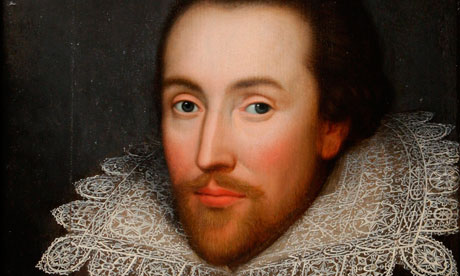
http://static.guim.co.uk/sys-images/Admin/BkFill/Default_image_group/2011/4/19/1303213280692/William-Shakespeare-007.jpg
The great fourth-century Greek philosopher Aristotle described a tragedy as “an imitation of an action of high importance, complete and of some amplitude: in language enhanced by distinct and varying beauties…by means of pity and fear effecting its purgation of these emotions” (qtd. in Kennedy & Gioia 856).  He may very well have been describing the epic Shakespearean drama, Othello.  William Shakespeare’s famous play concerning the downfall of a Moorish general interweaves jealousy, suspense, intrigue, murder, and suicide to create a magnificent tragedy of the highest Aristotelian order.  Aristotle prescribed three main ingredients for a tragic drama recipe: hamartia, or a tragic flaw in the tragic hero’s character that brings about his downfall; katharsis, or a purgation of the audience’s emotions so that they feel that they have learned something from the play; and anagnorisis, or the character’s revelation of some fact not previously realized (Kennedy & Gioia 856-857). Shakespeare’s protagonist Othello fulfills all of Aristotle’s requirements for a tragic hero, as Othello is a character of noble status who falls from that position of power to one of shame because of his hamartia. Moreover the plot of Othello contains a powerful katharsis through its climax and conclusion, and an anagnorisis when Othello realizes that Iago and Desdemona are not who they seemed to be.
            First of all, Shakespeare’s protagonist, the Moorish general Othello, fits Aristotle’s definition of a tragic hero.  According to Kennedy and Gioia, Aristotle states that a tragic hero must have three dominant qualities: he must be a person of high estate, he must fall from that position into unhappiness, and his downfall must be brought about by his hamartia, or his tragic flaw (856-857).  Othello is not only a successful general in the Venetian army but is also well respected, admired, and well liked.  Contrary to common assumption, “high estate” does not mean that the tragic hero must be royal or even noble; it simply “gives him a place of dignity to fall from and perhaps makes his fall seem all the more a calamity” (Kennedy & Gioia 856).  Since Othello enjoys a position of power and happiness at the beginning of the play, this status makes his downfall from beloved general to despised murderer infinitely more tragic and moving (Kennedy & Gioia 857-858).
http://www.utm.edu/research/iep-wp/wp-content/media//aristotle1.jpg            According to Aristotle, however, the tragic hero’s collapse cannot be a simple deterioration from success to misery.  The most distinctive feature of the Aristotelian tragic hero is hamartia; his downfall must be brought about by a character flaw or flaw in judgment that leads to his destruction.  “In Aristotle’s theory of tragedy,” explains The Cambridge Guide to Literature, hamartia is “the mistake or failing which brings about the hero's downfall.  ‘Tragic flaw’, the usual English translation, can mislead by its concentration on moral weakness - encouraging readers to view Hamlet's fate as a condemnation of his uncertainty, or Othello's as a condemnation of his jealousy - since hamartia can also be a matter of ignorance or mistaken judgment” (“Hamartia”).  Thus hamartia is more than a moral weakness; it is a crucial mistake on the part of the tragic hero that causes him to plunge from greatness to grief.  Othello’s mistake as a tragic hero is believing Iago’s treacherous lies about Desdemona’s unfaithfulness.  Instead of investigating the matter further, Othello rashly jumps to the worst conclusions about his wife and believes every lie that Iago whispers into his ear. Although the villain Iago is certainly to blame for bringing about Desdemona’s murder and Othello’s suicide, Shakespeare makes it quite clear throughout the play that Othello’s impulsive behavior and irrational naïveté are the main cause of his miserable end, as Iago himself states at the beginning of the play: “The Moor is of a free and open nature, / That thinks men honest that but seem to be so, / And will as tenderly be led by the nose / As asses are” (1.3. 376-379).  Iago recognizes that he can use these weaknesses of Othello’s to hasten his downfall. Therefore Othello fits Aristotle’s description of a tragic hero who has descended from high estate to destruction because of his hamartia.  
But the tragic hero is not the only element required by Aristotle for tragedy. Neither is it the only component of Othello distinguishing Shakespeare’s play from a comedic drama.  A true Aristotelian tragedy also contains what the Greeks called a katharsis, or a purgation that leaves the audience feeling justified and uplifted.  As Kennedy and Gioia point out, this purgation is not necessarily always a positive one (857).  In a tragedy like Othello, where almost all of the characters wind up dead, the audience is certainly not expected to feel happy or cheerful about the play’s conclusion, but they do feel a sort of justification at the lessons learned by the play’s characters and satisfaction in the villain’s punishment.  Elisa Galgut states that, “The concept central to Aristotle’s theory of tragedy – katharsis – has been the subject of much debate, and the traditional readings are modeled on some type of cleansing, medical purging or religious purification” (14).  Moreover, these interpretations assume that the fear and pity aroused by tragedy is purged throughout the play, resulting in the state of katharsis. The overall idea behind katharsis, she concludes, is that tragedy effects some sort of transformation in the audience’s emotions, leaving them with a feeling of justification (15).
Aristotle said, “The tragic pleasure is that of pity and fear, and the poet has to produce it by a work of imitation” (qtd. in Galgut 15).  This implies that to feel the satisfaction of a good katharsis in a tragedy, the drama must arouse feelings of pity and fear in the audience and then expunge those feelings through a satisfactory conclusion.   In Othello, Shakespeare certainly moves the audience to feel pity for Othello, for Desdemona, for Cassio, and even for Iago. They also fear for the fate of the happy couple, and realize their worst fears when Othello smothers his innocent wife in a jealous rage.  Once more the audience pities Othello when he recognizes afterwards that Desdemona is innocent and stabs himself in remorse. Even though the play does not end “happily ever after,” the deaths of the unhappy couple and the punishment of the villain Iago bring a sort of closure to the drama.
The ultimate purpose of katharsis in a tragedy, as Kennedy and Gioia point out, is to purify our feelings, refining them into something more ennobling (857).  The audience may not come away from a production of Othello laughing or feeling particularly cheerful, but they will certainly feel as though they have learned something important and witnessed an epic drama that has affected them morally and spiritually.  This is the purpose of tragedy – to dramatize the weaknesses, despair, and failings of the human spirit and to demonstrate how to better ourselves through this experience.  Through this emotionally charged plot filled with intrigue and conflict, Shakespeare has certainly met all of Aristotle’s requirements for katharsis. 
http://graphics8.nytimes.com/images/2011/03/14/crosswords/othello0314/othello0314-blog480.jpg
The last element of Aristotelian tragedy found in Shakespeare’s Othello is anagnorisis, a sort of epiphany or revelation of fact that was previously unknown to the tragic hero.  John MacFarlane states that Aristotle’s literal Greek definition of anagnorisis consists of two parts; “The first part of the definition characterizes recognition as a change from ignorance into knowledge, leading either to friendship or enmity” (367).  Shakespeare brings out this particular feature of anagnorisis towards the end of the play when Othello realizes that his trusted friend Iago has trapped him in a web of lies and has deceived him into thinking Desdemona is unfaithful.  Iago’s wife Emilia cries out before she dies, “Moor, she was chaste. She loved thee, cruel Moor. / So come my soul to bliss as I speak true” (5.2.258-259) and suddenly Othello understands that it is Iago who has misled him, not Desdemona.  This anagnorisis causes Othello to cry, “Wash me in steep-down gulfs of liquid fire! / O Desdemon! Dead, Desdemon! Dead! O! O!” (5.2.289-290), to stab and wound the villain Iago, and then to kill himself in remorse.
The second aspect of the Greek word anagnorisis is its more superficial, general connotation.  According to The Encyclopedia Britannica, anagnorisis simply conveys “the startling discovery that produces a change from ignorance to knowledge. It is discussed by Aristotle in the Poetics as an essential part of the plot of a tragedy… Anagnorisis usually involves revelation of the true identity of persons previously unknown, as when a father recognizes a stranger as his son, or vice versa” (“Anagnorisis”).  It is the simple epiphany experienced by the tragic hero as he realizes something significant, like the fact that he has killed the woman he loves for no reason.
This moment of revelation for Othello is the climax of Shakespeare’s play as everything comes together (or in Othello’s case, comes apart) before the tragic hero’s eyes and the full extent of Iago’s treachery and deceit is made clear to the him.  For the audience, the moment is especially climactic, because we have known the truth all along.  As Roger W. Herzel puts it: “When the man is Othello, a special kind of double vision comes into play: looking through our own eyes, we see the injustice of the action, but looking through the eyes of Othello we see its justice with equal clarity… In tragedy then, we witness an imitation of an action which has a terrible significance of which we are fully aware but the agent is not” (498).  The audience knows that Desdemona is innocent; thus, Othello’s baseless accusations and crime against her arouse special pity and loathing.  This makes the Othello’s anagnorisis at the end of the play exceptionally poignant.
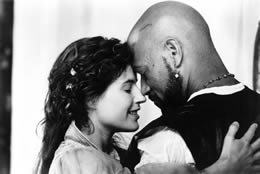
http://www.filmeducation.org/images/film_library/othello.jpg
How then does one distinguish a simple play of comedy from a great Aristotelian drama? Aristotle said three dramatic features provide this distinction: hamartia, katharsis, and anagnorisis (Kennedy & Gioia 856-858). Shakespeare’s great play depicting the downfall of a Moorish general through jealousy and deceit is such a tragic drama.   The Greek philosopher’s influence upon the sixteenth-century English playwright is evident in works such as Othello, as Sarah Dewar-Watson points out, “Discussion of Shakespeare's tragedies is still commonly framed in Aristotelian terms – the fall from greatness, the fatal flaw, the moment of catastrophe… It could be argued that Aristotle has had a hand in defining what is still generally regarded as the core of Shakespeare's tragic canon” (1). Through the character of Othello as a tragic hero with a fatal flaw, the purgation of emotion through the couple’s deaths and the punishment of Iago, and the epiphany Othello experiences at the end of the play, Shakespeare demonstrates with eloquence each and every one of Aristotle’s qualifications for tragedy. Othello is a tragic drama of epic proportions that has stood the test of time and continues to move audiences with its powerful themes of jealousy, intrigue, betrayal, faithfulness, death, and remorse.

References


Anagnorisis. (2013). In Encyclopædia Britannica. Retrieved from http://www.britannica.com/EBchecked/topic/22338/anagnorisis

Aristotle. (2010). Poetics. In X. Kennedy, D. Gioia, X. Kennedy, & D. Gioia (Eds.), Literature: An Introduction to Fiction, Poetry, Drama, and Writing (p. 856). New York: Longman.

Dewar-Watson, S. (2004). Shakespeare and Aristotle. Literature Compass , 1 (1), 1-9.

Galgut, E. (2009). Tragic Katharsis and Reparation: A Perspective on Aristotle's Poetics. South African Journal of Philosophy , 28 (1), 13-24, 12.

Hamartia. (2000). In The Cambridge Guide to Literature in English. Retrieved from http://www.liberty.edu:2048/login?url=http://www.credoreference.com/entry/cupliteng/hamartia

Herzel, R. W. (1974). "Anagnorisis" and "Peripeteia" in Comedy. Educational Theatre Journal , 26 (4), 495-505.

Kennedy, X., & Gioia, D. (2010). Literature: An Introduction to Fiction, Poetry, Drama, and Writing (6th Compact Edition ed.). (X. Kennedy, & D. Gioia, Eds.) New York: Longman.

MacFarlane, J. (2000). Aristotle's Definition of "Anagnorisis" . The American Journal of Philology , 121, 367-383.

Shakespeare, W. (2010). Othello, the Moor of Venice. Literature: An Introduction to Fiction, Poetry, Drama, and Writing (6th Compact Edition ed.). (X. Kennedy, & D. Gioia, Eds.) New York: Longman.


Tuesday, February 19, 2013

Nostalgia, Regret, and Futility – Exploring the Tone and Language of Tennyson’s “Ulysses"


“How dull it is to pause, to make an end / To rust unburnish’d, not to shine in use!” (22-23) Thus speaks the aged Greek hero in Tennyson’s famous poem “Ulysses” as the king contemplates the futility of life, bemoaning the passing of his youth. Although widely celebrated as a majestic piece that exhorts us to press onward in the face of grief, “Ulysses” contains yet a deeper meaning that Tennyson suggests using both the poem’s language and its tone – underneath the surface, “Ulysses” is a lament that muses with regret upon the vanity of a life wasted chasing after adventure. As Charles C. Walcutt of Michigan State Normal College writes, “The voice which speaks is not that of a trumpet, clear-throated and vigorous; it is the mournful sighing of strings” (Walcutt, 1946). Tennyson conveys his theme of regret using the following literary tools – tone and word choice.
             Tone is a powerful element of “Ulysses” – Tennyson portrays the attitudes and overall character of his poem using the aged warrior’s expression of feeling. Throughout its development, the hero of “Ulysses” articulates a broad range of emotions, from his initial frustrated reflections on his current situation, to his final determination to experience one last adventure before death – from “Matched with an aged wife, I mete and dole / Unequal laws unto a savage race, / That hoard, and sleep, and feed, and know not me. / I cannot rest from travel” (3-6) to “ ‘Tis not too late to seek a newer world…To sail beyond the sunset, and the baths / Of all the western stars, until I die” (56-61)
In the opening lines of “Ulysses,” Tennyson paints his readers a picture of an elderly Greek king sitting by an empty fireplace, lamenting the monotony of his current life. This emotion of frustration however quickly gives way to nostalgia, as Ulysses muses fondly upon his past adventures:
            Much have I seen and known, - cities of men
            And manners, climates, councils, governments,
            Myself not least, but honored of them all, -
            And drink delight of battle with my peers,
            Far on the singing plains of windy Troy. (13-17)
Then Ulysses turns to reflecting upon his son Telemachus and upon the differences between their characters – he observes that Telemachus seems contented with his lot governing the people of Ithaca, while Ulysses still feels restlessness in his own heart; “He works his work, I mine” (43). Ulysses next passes from thoughts of his son to contemplations of death and old age. His attitude towards death is similar to that of the Preacher in Ecclesiastes: “This also is vanity. For there is no more remembrance of the wise than of the fool forever, since all that now is will be forgotten in the days to come. And how does a wise man die? As the fool!” (Ecc. 2:15-16). Likewise Ulysses exclaims, “As tho’ to breathe were life! Life piled on life / Were all too little, and of one to me” (24-25), implying that just because he breathes doesn’t mean he feels alive – in fact, he feels his death drawing near, and the thought that “Death closes all” (51) fills him with a growing sense of despair. Ulysses has come to the same realization as the Preacher – no matter how many great deeds he’s accomplished during his lifetime, death is the inevitable end of all men. There is no escape from mortality.
The last emotion expressed by Ulysses in this poem is one of renewed, grim, and almost reckless determination to experience one final adventure before death overtakes him: “Come, my friends, / ‘Tis not too late to seek a newer world” (56-57). Tennyson enforces the despairing tone of his poem with this dramatic conclusion, in which Ulysses exhorts his fellow-mariners to join him once more on a sea-voyage. He cries,
            Tho’ much is taken much abides; and tho’
            We are not now that strength which in old days
            Moved earth and heaven, that which we are, we are (65-67)
The reader is never told whether or not Ulysses actually carries out his plan for a journey – he may have simply been dreaming of one last glorious adventure before death. As Walcutt states, “The effect of the poem is nearer to being an evocation of the state of mind of an aged warrior who dreams of former glory than it is to being the actual beginning of a new heroic quest” (Walcutt, 1946). The 16th century Italian poet Dante describes Ulysses’ final journey in his poem The Inferno, and according to Dante’s version, Ulysses and his crew perish a watery death because of the wrath of Zeus: “The poop rose and the bow went down / till the sea closed over us and the light was gone” (130-131). Whether or not Ulysses actually set out on this final adventure and was lost at sea is not revealed in Tennyson’s text, but the expression of Ulysses’ emotion is the same – he senses the futility of his life and is frustrated with the impotence of old age. His solution is to turn to glorious visions of battles and adventures, which he thinks will bring him the happiness he lacks.
            Throughout the poem “Ulysses,” the aged Greek warrior gives voice to a wide array of emotions, ranging from discontentment to nostalgia to hopelessness to grim determination. Tennyson sets the tone of his poem through this expression of attitude, but he also conveys the poem’s deeper themes using word choice and language. There are two specific passages in “Ulysses” where Tennyson’s word choice particularly strengthens the sense of futility and hopelessness of this poem.
            First of all, Tennyson employs the use of metaphor when describing Ulysses’ feelings of helplessness. Ulysses compares himself to an old sword that has seen great deeds in battle but now sits abandoned and rusty with disuse (22-23) and uses the adjectives “dull”, “unburnish’d”, and “gray” to describe his sense of feebleness and age (23-30). He yearns “to follow knowledge like a sinking star” (31). Ulysses’ language and choice of adjectives in this particular passage strengthen the poem’s sense of regret and its message of life’s meaninglessness.
            Towards the end of the poem, Tennyson once again employs an implied metaphor when his hero describes the ending of the day, signifying the closing of his life:
                        The lights begin to twinkle from the rocks;
                        The long day wanes; the slow moon climbs; the deep
                        Moans round with many voices. Come, my friends,
                        ‘Tis not too late to seek a newer world. (54-57)
Ulysses realizes that, like the long day waning, his life is also drawing to a close. This realization seems almost to frighten him, and he grasps for comfort at the only thing he knows and loves – adventure. Instead of examining himself and apprehending the futility of the things he has spend his life chasing after, his conclusion is that, though “death closes all; but something ere the end, / Some work of noble note, may yet be done, / Not unbecoming men that strove with Gods” (51-53).
         
  The ultimate message of Tennyson’s poem “Ulysses” is a deep and powerful one, similar to the final conclusion of Ecclesiastes; “Let us hear the conclusion of the whole matter: fear God and keep His commandments, for this is man’s all” (Ecc. 12:13). The pursuit of anything else in place of God – whether it be money, power, fame, glory in battle, or adventure – is fruitless and devoid of meaning. A life wasted chasing after these things is one that will end in regret and despair, as Tennyson’s Ulysses comes to partially realize. Tennyson conveys this message using his hero’s attitudes, expression of feeling, and choice of language – without God, our lives are meaningless. Without God, we have nothing to turn to when our end draws near and we begin, like Ulysses, to sense the futility of our life’s pursuits. And without God, the prospect of death is a frightening one indeed.

Sources

Dante, A. (2003). The Divine Comedy: The Inferno, the Purgatorio, and the Paradiso. (J. Ciardi, Trans.) New York, New York: New American Library.

Lord Tennyson, A. (1950). Ulysses. In P. R. Lieder, R. M. Lovett, & R. K. Root (Eds.), British Poetry and Prose (Third ed., Vol. 2, pp. 445-446). Cambridge, MA, United States: The Riverside Press.

Walcutt, C. C. (1946). TENNYSON, Ulysses. Explicator , IV (28), 3.

My most recent posts are the products of my freshman college assignments - in lit. class this week we had to analyze a particular poem's themes and the poet's methods of communicating those themes. I was pretty excited when I saw that Tennyson was one of the choices. (Because of reasons.) I hope it was as enjoyable to read as it was enjoyable to write. 

I have one more big drama paper due which I would like to share as well... and then I promise I will stop posting my college assignments on my blog. (Maybe.)

Wednesday, February 6, 2013

“The Rocking-Horse Winner” and “The Destructors” – Coming of Age in a World Without G-d


In two short stories, “The Rocking-Horse Winner” by D.H. Lawrence and “The Destructors” by Graham Greene, two young boys struggle to find their place in a cruel, modern world, a world where survival depends upon either luck or destruction, rather than upon G-d and love.  Each of these boys experience adult pressures and both respond in a manner that reflects modernist attitudes and perceptions.  At the peak of their character development, major differences between the two protagonists begin to emerge. Paul, who is motivated by an obsessive desire to make money for his unlucky parents, is merely a child who has burdened himself with pressures beyond his years, pressures which are eventually relieved through his illness and subsequent death.  Trevor, on the other hand, is someone who is much more cynical, destructive, and hopeless in his outlook on life.  He lives in a world that is utterly devoid of love, compassion, and any modicum of concern for others.  Greene resolves Trevor’s conflict, not through illness and death, but rather through the childish and senseless destruction of another human being and his property.
In these two short stories it is immediately evident that the two protagonists, Trevor and Paul, have much in common.  They both seem to be struggling to find their niche in society (Trevor as a member of the Wormsley Common Gang, and Paul as the eldest son in a proud family), and they both struggle with the pressures weighing on them in similar, destructive ways – Trevor in his destruction of Old Misery’s house for no reason, and Paul in his self-destructive frenzy for gambling.  Both Trevor and Paul attempt to manage conflicts and pressures that prove to be too much for them to bear.  Trevor is confronted with the horrible destructiveness of a crime he perpetrated, while Paul valiantly attempts to shoulder the impossible burden of restoring luck and happiness to his family.
Eventually, both boys are confronted with the harsh reality of a world without love.  Trevor muses with an adult, philosophical skepticism: “All this hate and love…it’s soft, it’s hooey.  There’s only things, Blackie.” Paul, after a conversation with his mother about having no money and no luck, jumps on his rocking horse and rides off on a frenzied quest, desperately demanding to be taken where there is luck.  Without G-d, there is no love, and without love, there is no reason not to destroy.  Without love there is only luck, as “The Rocking-Horse Winner” tells us in the opening line; “There was a woman who was beautiful, who started with all the advantages, yet she had no luck.  She married for love, and the love turned to dust.”
            There are also several important differences that distinguish the character of Trevor from the character of Paul.  These differences are highlighted by their respective conflicts.  Trevor’s struggle is self-centered and he is primarily concerned with his own status, not only in the gang but also in the modern world.  Paul, on the other hand, is anxious for his family’s financial situation, an anxiety that slowly evolves into a troubling obsession for him as he begins to hear voices whispering in the house, “There must be more money! There must be more money!” Trevor has already been hardened by a society committed to destruction and cruelty, while Paul destroys himself in his futile attempt to fight against the capricious hand of Fate.  Trevor embraces the selfish Darwinist attitude towards survival while Paul tries to fight it, believing that “G-d” has given him luck (yet failing to realize that “luck” is nothing more than a poor substitute for G-d Himself.)
            Two thematic elements evident in both stories are childhood conflict and destruction.  Both narratives focus on children struggling to come to terms with a cruel, modern and godless world.  Both stories also explore the relationship between godlessness and destructiveness.  In “The Destructors”, a world without love, morality, and compassion for others is one that eventually ends in mindless destruction as expressed in the demolition of a helpless old man’s home.  In “The Rocking-Horse Winner”, death, obsession, and insanity are the fruits of a godless worldview dependent upon luck and chance for happiness.
Paul’s childhood struggle is resolved in his death at the end of the story, while it seems that Trevor will eventually grow into a troubled, destructive young man.  For Greene, cruelty and destruction are dismissed in a din of cynical laughter in a world that is deaf to meaning and which finds expression in the cab driver’s reaction to the destruction of Old Misery’s house: “‘I’m sorry.  I can’t help it, Mr. Thomas.  There’s nothing personal, but you got to admit it’s funny’”.  If there is no meaning to be found, even in the cruelty of the world, then there is no point to struggle against it – all we can do is embrace it in all its destructiveness, as did Trevor, and laugh about it, as did the cabbie.
D.H. Lawrence presents a boy who is determined to resist and combat the cruel hand of fate, but whose efforts prove to be no less futile than Trevor’s.  Paul’s struggle is summed up by his uncle: “But, poor devil, poor devil, he's best gone out of a life where he rides his rocking-horse to find a winner.” In other words, Paul does not belong to a world that accepts fate and destruction, and Lawrence seems to imply by Paul’s death that the struggle is a hopeless one.
In these two short, but complex stories, D.H. Lawrence and Graham Greene develop protagonists and plots united by similar thematic elements.  Trevor and Paul are both children who face similar dilemmas as they try to function in a world without G-d and devoid of meaning.  The ideas of adult pressures and destruction are prominent in both stories as well.  However, the two authors resolve their respective dilemmas and conflicts very differently.
             Both D.H. Lawrence and Graham Greene have powerfully portrayed the futility of a world without G-d.  Where G-d and G-d’s love are lacking, destruction and the whimsical hand of fate rise to take their place.  And as Lawrence and Greene demonstrate in their stories, the final resolution of the struggle against G-d can never be anything but ultimate annihilation, hate, cruelty, and death.

Tuesday, January 8, 2013

Studying A Dead Language

When I was a young and immature high school freshman, my classmates and I used to chant to my long-suffering tutor and father;

"Latin's a dead language,
Dead as dead can be,
First it killed the Romans,
And now it's killing me!"

(I believe we thought at the time that we were rather clever.)

But now, four years of Latin study later, I realize that there was actually a bit of truth to our ingenious little rhyme, at least in regards to the first half. (The fact that the complexity of the Latin language contributed to the fall of the Roman Empire is somewhat more disputable.) Latin is a dead language, "as dead as dead can be." Why, then, did I devote so much time to learning a tongue which I will never speak? (Unless I travel to the Vatican City someday to converse with the Pope - an event which I think is pretty unlikely.)

The simple answer is that my father, a former private high-school teacher and a highly educated individual, firmly believed in the rigors of a classical education and put us through unusual, intensive courses such as analytical logic, Latin, Hebrew, rhetoric, classical literature, and geography with all their old-fashioned trimmings. Thus, I had no choice but to memorize lists of grammatical chants and verbal rules in a dead language.

The more complex answer lies in the fact that, in spite of being "forced" to study a language I'll never speak, I actually enjoyed the learning process. Moreover, during the course of studying Latin, I came to more fully understand my father's reasoning behind teaching us this particular language. I also discovered a few reasons of my own for learning Latin.

Abba used to tell us; "Once you learn Latin, you have the perfect tool in your hands to easily learn all of the Romantic languages," (which include French, Spanish and Italian.) His former students often tell him how grateful they were to have learned Latin in high school - Latin made it simple for them to grasp entirely different Romantic languages in college much more quickly than their classmates who lacked Latin backgrounds. My piano teacher, who studied Latin throughout high school, simply tacked on Italian endings to her Latin vocabulary when she visited Italy, and the native Italians understood her just fine. Not to argue that a grasp of the Latin language is sufficient to communicate in other Romantic languages; but a knowledge of Latin certainly makes learning these languages much simpler. Or so I've been told.

I would often came back at my father's argument with the retort, "Well if I'm going to learn Spanish, why don't I just learn Spanish, and not waste my time learning its foundational language?" His excellent reply; after Latin, you can easily pick up any Romantic language. You can become fluent in Spanish as well as French as well as Romanian as well as Italian as well as Portuguese. Your options are numerous - you can quickly become polylingual, instead of settling for bilingual.  Latin must thus be understood, in some ways, as a language-learning tool, not simply as a language in and of itself (though of course it is that as well.)

However, Latin isn't just a tool for learning fancy foreign languages. Its profound influence on the English language must never be underrated. My father estimates that as much as 80% of the English language comes from Latin and Greek roots. Think of that - 80 per cent of an entire tongue! I can think of quite a few English words off the top of my head right now that come from Latin... "Umbrella" - from the Latin word "umbra", meaning "shade." "Sedentary" - from the Latin "sedes", meaning "seat". "Nocturnal" - from the Latin "noctis", meaning "night". "Deity" - from the Latin "Deus", meaning "God." "Language" - from the Latin "lingua", meaning "tongue." ("Think 'linguini'", as our classmate Becca used to remind us helpfully.) There are literally hundreds more. I'm quite proud of the fact that when I hear or read a new English word that I've never come across before, more often than not I can figure out its meaning from my knowledge of Latin. Thanks to my father/tutor, of course, who insisted that he teach us this "dead" language, and who taught it well.

Latin did not only provide me with a broad, comprehensive basis for English vocabulary - it also contributed to my understanding of English grammar as well. Latin mechanics does not work the same way as English. The Latin language is infinitely more complex, yet at the same time more efficient. For example; in English, we can tell if a word is an adjective, adverb, or noun by the word itself (beautiful, swiftly, person.) In Latin however, we figure out how the word is being used in a sentence by its particular ending. Certain words have certain sets of endings. The endings for first-declension nouns are; -a, -ae, -ae, -am, -ah, -ae, -arum, -is, -as, -is. (Yup. Most of the chants are still hard-wired in there...) So, depending on context, a first-declension noun will end in -a if it's being used as a singular noun, -ae if it's being used as a singular direct object, -am if it's being used as a singular possessive noun, etc. There are several sets of declensions, many different ways the endings can be used, and quite a few different names for each of those uses (accusative, genitive, nominative, ablative, dative.) I won't even try to explain what happens when it comes to Latin verbs.

See what I mean? Complex... yet systematic, economical, efficient. Because of this complexity, English grammar in contrast is a piece of cake. Learning how to wrap my mind around the details of Latin grammar gave me a very solid understanding of words in general, and all of the different ways in which they can be used.

It might sound like the dullest class in the world. But sometimes it was actually enjoyable. We had Latin vocabulary contests (played sort of like an ancient Roman "Blurt!"), translated the entire book of James from Latin to English, and read the stories of Troy, Aeneas, Dido, Caesar, Romulus and Remus in their originals. We encouraged each other in Latin - Perfer et obdura; dolor hic tibi proderit olim - ("Be patient and tough; someday this pain will be useful to you"), complained in Latin - Cogito ergo doleo - ("I think, therefore I am depressed"), and apologized in Latin - Absit invidia - ("No offense intended"). Stacks and stacks of vocabulary cards, lists and lists of chants to memorize, pages of ancient sentences and stories to translate. It was fun.

I certainly don't regret it. The fact that I'm able to read Hugo's Hunchback of Notre Dame and O' Henry's Short Stories and understand their numerous Latin references without the help of a Latin-to-English handbook... that alone makes those four years worth it to me. I've come to agree wholeheartedly with my father's decision that a truly classically educated person is at least superficially familiar with the rudiments of the Latin language.

And last, but not least, Latin certainly comes in handy when you wish to show off... As the ancient Romans used to say;
"Quidquid Latina dictum, altum videtur": "Anything said in Latin sounds profound."


Friday, August 24, 2012

The Only Free Man

https://blogger.googleusercontent.com/img/b/R29vZ2xl/AVvXsEgrr6XUHWfc7QFLSaPermSWtyYDJtJNgCu0Depih72llW4gW9QyRqhRpJlPJqYbrxi8xJEaHAitgNAyVnLDJWuNvNwc881SWpT0x0NE1EgawJ3F6dmK9871tvX4wbYuVsTKbcpoZPW35w/s1600/Pen-Paper.gifI don't presume to be a writer on the same level or of the same quality as W. Somerset Maugham, one of the greatest English authors of the twentieth century. I don't claim to hold all of his views or admire all of his ideas. However when I came across this passage in one of his greatest novels, (though one of his most depressing and satirical,) "Cakes and Ale", its profundity and truth gave me cause to stop reading and contemplate it for a few moments.
                 "She embarked upon a conversation which, I gathered from her tone, was of a facetious and even flirtatious character. I did not pay much attention, and since it seemed to prolong itself,  I began to meditate upon the writer's life. It is full of tribulation. First he must endure poverty and the world's indifference; then, having achieved a measure of success, he must submit with a good grace to its hazards. He depends upon a fickle public. He is at the mercy of journalists who want to interview him... of editors who harry him for copy... of persons of quality who ask him to lunch and secretaries of institutes who ask him to lecture, of women who want to marry him and women who want to divorce him, of youths who want his autograph... of agents, publishers, managers, bores, admirers, critics and his own conscience. But he has one compensation. Whenever he has anything on his mind, whether it be a harassing reflection, grief at the death of a friend, unrequited love, wounded pride, anger at the treachery of someone to whom he has shown kindness, in short any emotion or any perplexing thought, he has only to put it down in black and white, using it as the theme of a story or the decoration of an essay, to forget all about it. He is the only free man."
                I am not sure if any English professors or literary analysts would agree with me, but to my mind this idea as Maugham expresses it here actually encapsulates the whole of this particular work. "Cakes and Ale" satirizes the social and personal lives of authors in twentieth century England through the characters of Alroy Kear, William Ashenden, Edward and Rosie Driffield. The long-suffering author Edward Driffield is forced to put up with the antics of his coarse and wayward wife Rosie as she flouts the conventions of the times and carries on affairs with all of his friends, including Ashenden. Maugham leads one to believe that Edward has no idea of what is going on, and indeed, not even Rosie suspects that Edward is aware of her behavior until the very end after she has run away with another man. Edward then publishes a book in which the heroine, obviously Rosie, is unfaithful to her husband in his time of deepest need, describing her actions with the greatest of detail. This leaves Rosie to wonder in the end how much her husband really knew, and moreover, why he never gave any indication of his knowledge. Driffield offers no explanation, and Rosie, leaving the past behind and moving on with life, remains untroubled by too much speculation. But the answer is given to us the readers by the narrator Ashenden in the passage above.
              Driffield was, in every sense of the term, an author. His refuge was his writing. He was "the only free man", because no matter what happened to him, it could go down in black and white and he would be untroubled by it forever after. Friends could disappoint and betray him - his wife could run away with another man - his child could die - he would pay heavily the price of fame. And yet none of this could ever inhibit his one true gift, nor quench his one true passion - it could only fuel it and enhance its quality. This is why Maugham describes the author as "the only free man."
              This led me to reflect upon the real true freedom of writing. I have never had to pay the price of fame, and I hope that I never will. Yet in some small measure I can understand what Maugham meant when he said that the writer has one compensation, because the most significant freedoms of the writer are his freedoms of thought and expression, and these are the liberties that are the most precious and the most useful to him. They are also the most precious and useful to those around him privileged to share in his thoughts. A truly gifted author stands above the common folk only because he has found a way to express thoughts and experiences that everyone has in an eloquent, poignant, and unique way - he has a voice that people want to listen to. This is his liberty - that when he encounters life's pitfalls he is merely given more words for that voice.
              Some people express themselves through music - some through their clothing - some through their speech. Most of us express ourselves partly through all of these things. But the author is unique. He expresses himself by taking to pen and paper (or nowadays, to Microsoft Word) and literally expressing his opinions, his thoughts, his experiences, and his ideas to the world. Sometimes the world listens. Sometimes it doesn't. It really shouldn't matter. The writer writes because he loves writing for its own sake, because it is a sweet freedom to him, as essential to him as food.
            But don't envy the writer this unique freedom, for it comes at a heavy cost, as Maugham expresses above, a cost that includes "persons of quality who ask him to lunch, and secretaries of institutes who ask him to lecture, women who want to marry him and women who want to divorce him, of youths who want his autograph..." Only an author can understand the longing to express life's turmoil in order to be free of it; only a gifted writer can live contently in his rich inner world while the rest of mankind tumbles head over heels attempting to make sense of life. The author's refuge enables him to analyze what has gone wrong - and if not fully understand, at least relocate it to a solid black-and-white place where it can bother him no longer. When I think about the unique refuge the writer has in his writing, I realize that indeed, the writer is as Maugham claims -  "the only free man."

Wednesday, July 11, 2012

The Internet Is Creating A More Intelligent Society


         Though I may be dating myself by this anecdote, I feel compelled to share it anyway in order to demonstrate how far our society has progressed along the road of the Information Age in the past decade. Whenever I was assigned an essay in 5th grade, I was forced to take a trip to the bookshelves in the basement, locate the shelf creaking under the weight of the enormous Encyclopedia series, run my finger along the alphabetized titles until I found the desired word category, summon all my strength to pull out the gigantic volume, heave it onto the floor, flip through the pages and then proceed to laboriously copy out the encyclopedic entry using paper and a pencil. I would then use this information in my essay to make it more credible and informative. That is how it was done when I was ten years old, and for this reason I loathed writing essays.
       Now, obviously, things are different. As I stated in my last post on this subject, all I need to do now to supply my essays with authoritative sources and facts is to open up my MacBook Pro, get onto Google, type a few words, and there, I have sources and facts in abundance, usually more than I ever want or need. We possess a wealth of information literally at our fingertips, and this is truly amazing to one who has grown up watching the progress of this Information Age unfold. 
      The internet has undeniably altered the way that our society learns, thinks, understands, and researches. Some argue that this change has been for the worse - that because of the internet, now we have shorter attention spans, weaker memorization skills, and shallow minds incapable of deep thought. However true these claims may be, we also can learn much more quickly, we can access a multitude of data in a matter of seconds, we can multi-task easily, we can understand the complex mathematical and physical science that is computer programming, we are able to connect with more people and different cultures around the world, and save so much time and effort through the use of Google, Bing, and Wikipedia. Perhaps we retain less information, but why do we need to? The information is at our fingertips at all times. The internet is not making us less smart, it is "simply challenging us to become smarter in new ways." ("Is the Internet Making Us Smarter or Dumber? Yes.", by Matthew Ingram, June 6th, 2010, Gigaom.com)
      First of all, simply take a moment to stop and contemplate the overwhelming and exhaustive amount of data that exists on cyberspace purely for our cognitive benefit. Contemplating Google alone is enough to blow one's mind. You can literally ask anything, ("Does God exist?", "How do I freeze strawberries?", "Why should I get married?", and "Where can I find Tom's shoes?" are just a few search suggestions that I've seen, meaning that someone out there has actually asked Google these ridiculous questions,) and receive a million answers in a few seconds. Frequently at the dinner table when my little brother asks my dad some random question about why the toilet bubbles when it flushes or what year King Peter the Great died, all my dad has to do it pull out his iphone and find the answer. Our essays and articles are more thoroughly researched and the quality and quantity of our daily information intake is much improved. If the internet is not making us smarter, it is certainly making us much more well-informed. 
      Along those lines I propose my second support of the thesis that that internet is not making us stupider; the internet has proved to be a valuable asset to education. Not only are vast amounts of historical and scientific data available for easy access to the student, but helpful learning websites, educational software, and school gadgets exist in abundance. Throughout high school I benefited enormously through website programs such as Sparknotes' study guides, Collegeboard's SAT and CLEP prep, StudyBlue's easy and efficient online flashcards, and Rosetta Stone's online language games. Reading and writing have become more central to our culture with the use of email, blogs, twitter, facebook, online newspaper sites, and yes, even texting. We can say what we want to say more quickly and efficiently. 
     Thus teens like me, though accused of being shallow-minded zombies addicted to the internet, have benefited perhaps more than any other social group from its use, because we've had myriads of sources to aid our learning. We've learned quickly how to best utilize those sources; we've been able to connect more widely with people all over the world through social networking sites; we've been able to virtually travel to places we never dreamed of; and we've been able to freely share our ideas, express our opinions, and publish our thoughts via the internet. For these purely selfish reasons I'm thankful to have had the internet as an additional teacher during high school.
      What about the accusation that before the internet people were smarter, more learned, more educated, and less distracted? Well to this I can only retort that even during the Middle Ages shallow distractions existed in abundance as well: they always will exist where shallow minds can be found to desire them. This is pure human nature. The internet has given knowledge to those with the wisdom to desire it, just as Gutenberg's printing press gave the Bible to religious and devout individuals. But Gutenberg's printing press also eventually gave issue to cheap sensation newspapers, vulgar fiction and erotic novels, just as the internet is also the source of much pornographic material, misleading advertisements, and shallow distractions. (Angry Birds, anyone??) Something as multi-faceted as the internet cannot be blamed for lowering the IQ level of an entire society. If you are unfocused, scatterbrained, or have weak memorization skills, don't blame the internet - blame yourself. There is a lot of knowledge and learning to be found on the internet if you have the discipline and focus to search for and find it. 
          My final conclusion then, is the same as the title of an online article by Matthew Ingram; "Is the Internet Making Us Smarter or Dumber? Yes." There are numerous good things and numerous bad things about the internet, so its goodness or badness really depends upon how you, as an individual, choose to utilize it. In fact the internet is so double-sided that I discovered I am not the only one to write a debate on the subject - the Wall Street Journal also recently published two articles arguing opposing views about whether the internet is making us smarter or more ignorant. As Ingram concluded his article; "To the extent that we want to use them to become more intelligent, they are doing so; but the very same tools can just as easily be used to become dumber and less informed, just as television can, or the telephone or any other technology, including books." But the advantages, I believe, certainly outweigh the disadvantages. We don't outlaw all books because some of the books contain superficial or inappropriate material, and with the same logic, we can make the best use of all the wonderful things that the internet has to offer.

Wednesday, February 8, 2012

Simplifying Capitalism - Introduction


If I stopped the average American on the street and asked them what they thought of Communism, nine times out of ten the reaction towards this institution would be negative.

Most Americans are afraid of Communism for many reasons, the main one being that they have very recently been eyewitnesses to its oppressive and destructive effects on the peoples/economies of China, Russia, and others in the forms of censorship of the press, violent authoritarianism, harsh quenching of liberties such as liberty of speech and thought, savage anti-religion campaigns, etc. McCarthyism in the 1950s was one example of how Americans feel about Communism - so was the largely unsuccessful and embarrassing Vietnam War of the 60's and 70's - and so was the Cold War of the 80's. Fear of 'Commies' pervades this nation.

Yet how many of us really understand the philosophies of Karl Marx in all of their complexity? What element(s) of Communism make it so repressive of mankind's natural rights and liberties? Americans understand from the examples of China and Russia that Communism is wrong, but do they ultimately recognize why? Something vital to understand is that Communist theories are fundamentally unsound, which has in turn led to phenomena like censorship of the press in Russia and 70 million deaths under Chinese Communist leader Mao Zedong (1893-1976.) These cases of massacre and oppression are not radical, rogue events perpetrated by insane leaders - they are the results of an economic philosophy, one that blatantly contradicts the guiding premises of the Jewish Torah.

In summary, to understand why "Communism is bad" one must first understand what Communism essentially is. However that is a study for another post. At present, I'm going to take the opposite side and discuss what Communism is not.

Communism's nemesis, as you probably know, is capitalism. There are many definitions of this word, and for the time, I'm going to put those aside and look at capitalism how the Nobel prize-winning economist Milton Friedman understands it in his book Capitalism and Freedom. I'm reading this book for my literature class at the moment, and to better understand it (not exactly Dr.Seuss level stuff, just sayin'!) I'm planning on blogging my notes. You may not be a politician or Barack Obama's economic adviser, yet I think it's still important that everyone understand what a free market should look like and why Communist economic thought is fundamentally wrong. In any case it will be interesting to learn more about what one of the greatest thinkers of the century has to say about Communistic fallacies and how our government could be doing it better.

Wednesday, December 7, 2011

An Argument for the Awesomeness of Tennyson

                                                                            
                    “I hold it true, whate'er befall;
                    “I feel it when I sorrow most;
                  “ ‘Tis better to have loved and lost
                    "Than never to have loved at all."

Everyone has heard the latter part of this stanza at least once in their lifetime, but not everyone knows who penned these famous words about love and loss. The author was Alfred “Eccentric” Lord Tennyson, one of the greatest poets who ever lived, and certainly the greatest poet of his time.

Alfred was born in England, the fourth of twelve children, in 1809, the same year in which Abraham Lincoln and Charles Darwin were also born. When he was eighteen in 1827 he left to study at Cambridge, where he became part of a literary group called the “Apostles”. He toured Europe with his best friend Hallam, who later became engaged to Alfred’s sister Emily. In 1833 Alfred went back home, no longer able to afford college tuition, and it was there that he learned that Hallam had died suddenly of fever while travelling abroad. His terrible grief at his friend’s death influenced much of his later poetry, especially the great elegy “In Memoriam.”
In 1850 William Wordsworth, Britain’s Poet Laureate, died, and Tennyson was named to take his place. He married Emily Sellwood, whom he had loved since 1836, and they moved in 1853 to a country house on the Isle of Wight where they raised two sons named Hallam and Lionel. Later in life Tennyson continued to write and gain popularity, and his poetry began to follow a narrative style. In 1884 Queen Victoria and Prince Albert granted Alfred a baronetcy. In 1892 he died at the age of 83 from heart failure and was buried in Westminster Abby. 
Although Tennyson was popular in his own day, his successors the Edwardians and Georgians of the early 1900s often mocked and ridiculed him, accusing him of escapism in his themes of knights, Camelot, and chivalry. Today, however, many critics consider him the greatest poet of the Victorian age. From Milton to Tennyson there was no poet combining in his person all the skills of expressing detail, love and reverence for God, optimism, and penetrating introspection with uniqueness, nor has there been one since Tennyson. To the critics, four predominant poetic traits make Alfred Lord Tennyson the greatest poet of the Victorians – to me, they make him one of the greatest poets in the history of language. These are: his skill in portraying details such as color, how he stands out from the other Romantic poets such as Wordsworth and Keats, the method by which his poems culminate in optimism and hope in God, and, most importantly, his belief in and reverence for God.
 One of Tennyson’s most prevailing characteristics is his ability to convey color to the mind’s eye of the reader. For example, in “The Lady of Shalott”, Sir Lancelot’s attire is described in rich detail: “All in the blue unclouded weather / Thick-jewell’d shone the saddle-leather / The helmet and the helmet-feather / Burn’d like one burning flame together / As he rode down to Camelot. / As often thro’ the purple night / Below the starry clusters bright / Some bearded meteor, trailing light / Moves over still Shalott. / His broad clear brow in sunlight glow’d / On burnish’d hooves his war-horse trode / From underneath his helmet flow’d / His coal-black curls as on he rode / As he rode down to Camelot.”
Tennyson learned much of this sense of imagery from Keats, but his portrayals are vivid rather than vague, his colors brilliant in imagination rather than soft and fanciful. In “Morte d’Arthur”, Excalibur's hilt "twinkled with diamond sparks, / Myriads of topaz-lights, and jacinth-work / Of subtlest jewelry.” Tennyson was famous for these passages of sparkling color and poetic artistry and it is one of the strongest points of his poetry. As an early twentieth century critic praises this ability; “His appreciation for sensuous beauty, especially color, is acute…his descriptions are magnificently beautiful, often with much detail…Add the truth and tenderness of his emotion, and it results that he is one of the finest and most moving of lyric poets.” (Alfred Tennyson from A History of English Literature, by Robert Huntington Fletcher, 1918)
Another one of Tennyson’s greatest assets was his singularity among all of the other Romantic poets, including Keats, Coleridge, and Wordsworth. He stands alone in many of his themes, motifs, and symbols, as well as his modes of expression and ideals. Unlike the other Romantics, who viewed nature as a sort of thing to be worshipped, Tennyson put nature into its proper perspective as a medium expressing and pointing the way towards the higher Creator Being. Some of his predominant themes are, the reconciliation of religion and science, the virtues of perseverance and optimism, and the glory of England, while some of Keats’ prevailing themes consist of the inevitability of death and the worship of beauty in nature, (“Beauty is truth, and truth, beauty.”) Wordsworth mourned the passing of England’s glory and Coleridge is notorious for a certain bizarre use of language and remoteness from reality –these characteristically Romantic traits contrast Tennyson’s reverence for England and for the importance of accurate scientific detail in his poetry. Undoubtedly Tennyson was influenced by his Romantic predecessors, but he veered from their path in numerous ways, and became the father of Victorian poetry in so doing.
   Out of Tennyson’s poetic themes, extolling the virtues of optimism is one of the greatest and most unique – after his best friend’s death he struggled through a time of intense despair, which he eventually overcame. Many of his poems exemplify this struggle with despair and hope, culminating in the ultimate victory of optimism over depression, and the realization of the need to carry on trusting in God. This need for perseverance is best expressed in the works “Ulysses” and “In Memoriam,” but it also appears in “The Lotos Eaters”, “The Lady of Shalott”, and “The Charge of the Light Brigade.” The latter two glorify characters who embrace their destinies in the face of death.
The ideas of Tennyson’s poetry are noble, yet conservative, expressing the Victorian ideals of his time. Instead of becoming confused and straying from religion because of the scientific discoveries of his time, as so many Christians did, he used his poetry to reconcile this newly discovered science with God.
God is essentially the optimism of Tennyson’s poetry. It is best expressed in his long “In Memoriam”, a series of short poems woven together to create an elegy to his dead friend, Arthur Hallam. It begins as a tribute to the “Strong Son of God”, and folds out into the argument that, though man, never having seen God’s face, has no proof of His existence, he can still reach God through faith. Tennyson attributes the sun and moon to God, acknowledging Him as the creator of life and death. The Son of God Tennyson portrays as both human and divine – man controls his own will, but the Son of God has also predestined each man for a purpose. The speaker in “In Memoriam” expresses the hope that “knowledge [of God will] grow from more to more” though this knowledge should be combined with a reverence for God’s incalculable wisdom. The speaker also repeatedly asks that God would forgive him for his grief for “Thy creature, whom I found so fair.” Yet Tennyson concludes the poem with the hope that his best friend lives on in a better and higher World.
 “In Memoriam” is seen as the ultimate expression of Tennyson’s belief in God; “In religion, his inherited belief, rooted in his deepest fibers, early found itself confronted by the discoveries of modern science, which at first seemed to him to proclaim that the universe is much what it seemed to the young Carlyle, a remorseless monster, 'red in tooth and claw,' scarcely thinkable as the work of a Christian God who cares for man. Tennyson was too sincere to evade the issue, and after years of inner struggle he arrived at a positive faith in the central principles of Christianity.” (Alfred Tennyson from A History of English Literature, by Robert Huntington Fletcher, 1918
Thus Tennyson stands alone on a pedestal of greatness, for though the Romantic Keats and Wordsworth had genius, they did not have belief in God, and their genius was misplaced worshipping ideas such as Nature and Innocence. Though many more modern poets following Tennyson have used their poetry and genius to glorify God, they have not expressed their ideals as exquisitely, nor with as much skill, as Tennyson has done. His vivid and beautiful use of the English language combined with the wide variety of  poetic forms he mastered, such as lyrics, ballads, “descriptive poems, sentimental reveries, and idyls; long narratives, in which he displays perfect narrative skill; delightfully realistic character-sketches, some of them in dialect; dramas; and meditative poems, long and short, on religious, ethical, and social questions”, (Alfred Tennyson from A History of English Literature, by Robert Huntington Fletcher, 1918) place him among the great geniuses of literature. Alternatively, his departure from the accepted and usual themes and ideals of these geniuses set him apart into his own category of greatness, reserved only for those masters who gave glory to their Giver for their mastery.